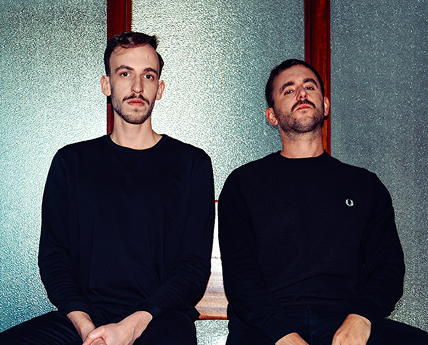
Luís Pinto Nunes (1988) holds a Master’s degree in Art Studies – Museology and Curatorship, a Postgraduate Diploma in Artistic Studies – Museological and Curatorial Studies, and a Bachelor’s degree in Fine Arts from FBAUP. He also attended the Independent Study Program at Maumaus School. In 2026, he was appointed Coordinator of the National Touring Programme of the Serralves Foundation, where he oversees the strategic development, coordination, and dissemination of the institution’s travelling exhibitions and cultural initiatives. He coordinated the Museum and Exhibitions Office at FBAUP [2012-2025], where he developed exhibition and curatorial projects, and served as curator and manager of its collection. He coordinates the collective LPN-LAP, where he develops curatorial and exhibition projects, editorial work, and consultancy for cultural projects. He is a member of the organising committee and curator of the xCoAx conference, and a collaborating research member of i2ADS at FBAUP.
Luís Albuquerque Pinho (Porto, 1978) holds a degree in Architecture from
Universidade Lusíada do Porto. Postgraduate student in Art Studies –
Museum and Curatorial Studies at the Faculty of Fine Arts of the
University of Porto (FBAUP). In 2011, was a resident curator at Node
Center, Berlin, and he also attended the Independent Study Programme at
Escola Maumaus.
Between 2000 and 2011, collaborated with Isabel
Furtado and João Pedro Serôdio. From 2001 to 2019, is an Associated
Architect at Garcia e Albuquerque. Since 2011, coordinates the
collective LPN-LAP, where he develops curatorial and exhibition
projects, editorial work, and consultancy for cultural projects. He
currently leads his own architecture and consulting practice,
Albuquerque Pinho and Co. — a collaborative architecture and design
studio based in Porto. The studio works across architecture, object
design, wellbeing, critical thinking, and aesthetics, operating both
nationally and internationally.
In 2021, served as a jury member
for the SHUTTLE grants, Porto City Hall (Pláka).